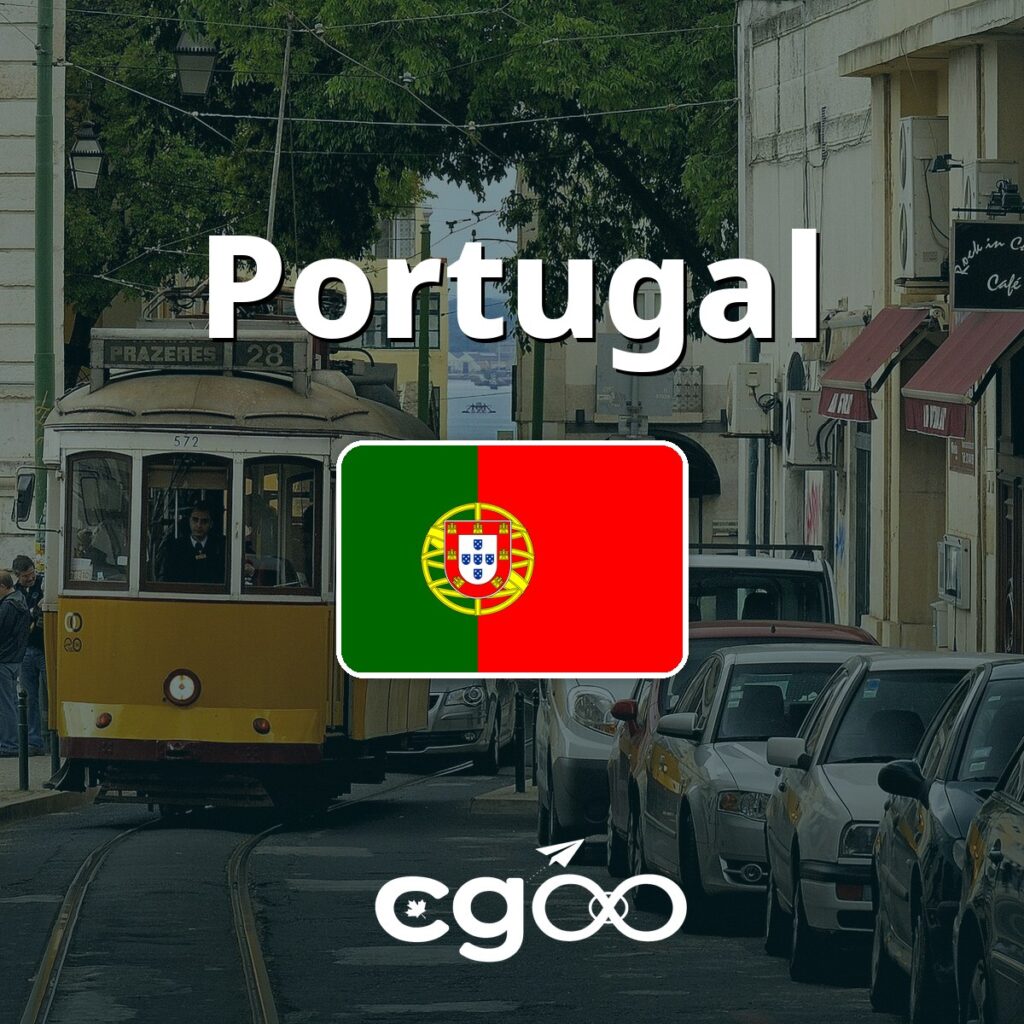
Portugal

Portugal
Portugal🇵🇹

Showing all 31 results

Traveling to Portugal? Land Connected.

Portugal is compact, hilly and made for wandering — tram routes, viewpoint maps, train times to Sintra and Porto, and seafood spots all work better with data from the moment you land. Install your CGOO eSIM before you fly and you connect on arrival, with your own number still reachable for calls and texts back home.

Choose the Plan That Fits Your Trip

  • Fixed data: 1 GB to 100 GB, valid 3 to 90 days — from light maps-and-messaging trips to heavy streaming and hotspot use.
  • Unlimited & Unlimited Plus: 1 to 30 days at full 5G speeds. A fair usage policy applies — in rare cases speeds may be reduced after 1 GB of use in a day, and full speed resumes the next day.
  • Networks: plans run on major local carriers including MEO (5G), NOS (5G) and Vodafone (5G). The exact carrier and speed for each plan are listed in its Plan details, right on the plan.
  • Instant delivery: your QR code and installation link are emailed within minutes of checkout. Install before your flight; validity starts on the day you activate.
  • Good to know: your phone must support eSIM (dial *#06# and look for an EID), and your 15-digit IMEI is required at checkout so your eSIM can be provisioned.

Travel Highlights

  • Lisbon: Tram 28 through Alfama, the Belém waterfront, and miradouro viewpoints at sunset.
  • Porto: port lodges in Vila Nova de Gaia, the Dom Luís I Bridge, and the Douro Valley by train or boat.
  • Sintra: Pena Palace and the Moorish Castle, an easy day trip from Lisbon — go early.
  • The Algarve: Lagos cliffs, Benagil Cave by boat, and long beaches around Tavira.
  • Madeira: levada walks, Funchal markets, and the island’s year-round spring weather.

Getting Around

  • Airport to the city: Lisbon Humberto Delgado Airport (LIS) connects to the city centre by metro and bus; Porto Airport (OPO) connects by metro. Use the official taxi rank at the terminal and ignore anyone offering a ride inside the terminal.
  • City transport: metros, trams, buses and trains cover Lisbon and Porto well; Tram 28 is a popular way to see Lisbon's old quarters. Buy tickets at a station or in the transit app before you travel.
  • Ride-hailing — yes, widely available: Uber and Bolt are the main apps in Lisbon, Porto, the Algarve and Madeira, with upfront prices in the app. FreeNow withdrew from Portugal in 2022, so this draft does not claim it. Lyft does not operate in Portugal.
  • Driving: if you rent a car, check whether your licence needs an International Driving Permit before you arrive, and expect tolls on motorways and tight parking in Lisbon's old quarters. Full rental details will have their own card later.

Safety and Practical Tips

Portugal is generally safe for travelers, with low rates of violent crime. The main risks are pickpockets on Lisbon’s Tram 28, around Rossio and in Porto’s Ribeira at night — keep your phone and wallet close on crowded trams.

Lisbon’s hills and cobbles punish bad shoes, so pack grippy soles. Most places take cards, but small cafés and market stalls may prefer cash. Keep an eye on tram and bus schedules on Sundays, when service thins out.

Entry and Visa

Visa rules depend on your passport. Many passports enter Portugal visa-free for up to 90 days in any 180-day period under Schengen rules; other nationalities need a Schengen short-stay visa applied for before travel. Check the latest requirements for your passport before you book, and make sure your passport is valid for at least three months beyond your planned departure from the Schengen area.

Official information: Ministry of Foreign Affairs (Portugal) and the Travel to Europe (EU).

Weather and Climate

  • Climate zones: Mediterranean in most of the country — hot, dry summers and mild, wetter winters — with a milder, wetter Atlantic climate in the north, including Porto, and a subtropical climate in Madeira and the Azores.
  • Lisbon at a glance: January averages around 11°C (highs near 15°C, lows near 8°C); July averages around 23°C (highs near 28°C, lows near 18°C). Rain totals around 700 mm a year, mostly from October to March; summers are usually dry.
  • Best months: April, May, September and October are generally the best for sightseeing — mild, with fewer crowds than summer. July and August are the warmest and busiest, and the best for the Algarve beaches. December to February is mild in Lisbon and the Algarve, cooler and wetter in the north.
  • What to pack: layers all year, plus a light waterproof jacket and comfortable walking shoes for Lisbon's hills and cobbles. Summer: light clothes, sunscreen and a hat. Winter: a warm coat for the north; a lighter jacket is usually enough in Lisbon.

Money and Payments

  • Currency and cards: euros (EUR). Cards are widely accepted in shops, restaurants, hotels and transport; contactless is common, with a €50 limit per tap without a PIN in most places. Keep some small cash for markets and small cafés, as some taxis and small vendors may not always accept cards.
  • WISE and similar travel cards — yes, supported: the Wise card works in Portugal wherever Visa or Mastercard is accepted, and a Wise EUR balance means you spend euros without converting each time. Wise also provides an EU IBAN for SEPA transfers. Similar multi-currency cards, such as Revolut, work the same way on the Visa/Mastercard network. Check the card app for current ATM limits and fees before you travel, as these change.
  • Tipping: service is not normally added as a separate charge, and tipping is optional — rounding up, or 5–10% for very good service in restaurants, is appreciated but not expected. Taxi drivers are usually rounded up to the nearest euro.
  • Cash tips: use ATMs in town rather than airport exchange counters, which usually give worse rates, and always choose to pay in euros (local currency) if a terminal or ATM offers to convert to your home currency — that conversion is almost always worse.