New Zealand

New Zealand
New Zealand🇳🇿

Showing all 30 results

Traveling to New Zealand? Land Connected.

New Zealand is a road-trip country: two islands of volcanoes, fjords and lake towns, with your phone as navigator, booking desk and weather watcher. Install your CGOO eSIM before you fly, and you land connected — no airport SIM queue, no roaming bill, and your own number stays reachable for calls and texts back home.

Choose the Plan That Fits Your Trip

  • Fixed data: 3 GB to 100 GB, valid 3 to 90 days — from a one-island week to a full North-to-South journey.
  • Unlimited & Unlimited Plus: 1 to 30 days at full 4G/5G speeds. A fair usage policy applies — in rare cases speeds may be reduced after 1 GB of use in a day, and full speed resumes the next day.
  • Networks: plans run on major local carriers including Spark (5G) and Vodafone New Zealand (4G). The exact carrier and speed for each plan are listed in its Plan details, right on the plan.
  • Instant delivery: your QR code and installation link are emailed within minutes of checkout. Install before your flight; validity starts on the day you activate.
  • Good to know: your phone must support eSIM (dial *#06# and look for an EID), and your 15-digit IMEI is required at checkout so your eSIM can be provisioned.

Travel Highlights

  • Auckland: harbour views from the Sky Tower, then a ferry to Waiheke Island for vineyards and beaches.
  • Rotorua: boiling mud pools and geysers, plus Māori culture and a traditional hāngi dinner.
  • Queenstown: Lake Wakatipu under the Remarkables — bungy, jet boats or just the world's prettiest picnic spots.
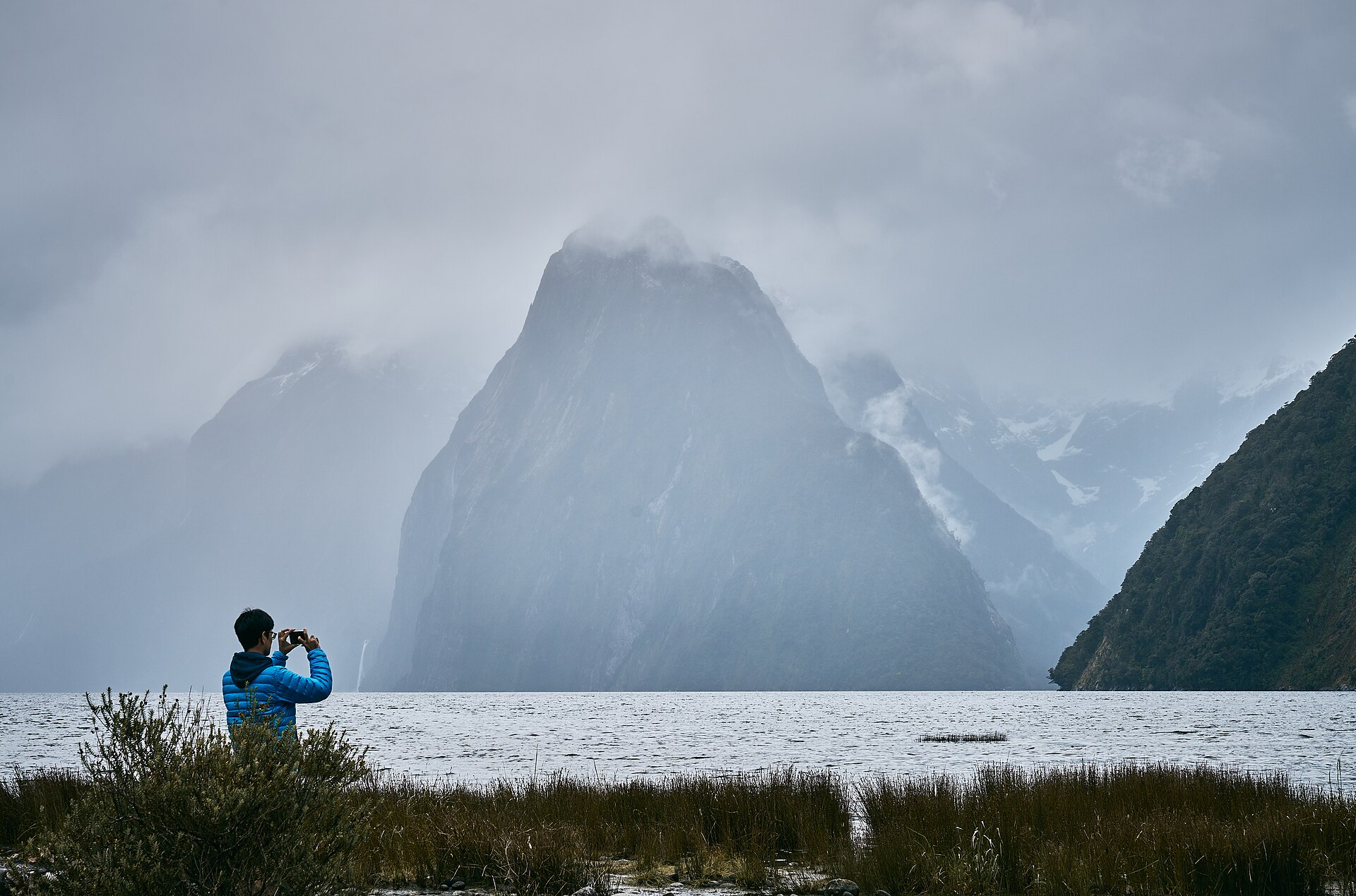
  • Fiordland: a cruise on Milford Sound in the rain, when a thousand temporary waterfalls pour off the cliffs.
  • Wellington: Te Papa museum, the cable car and a compact capital that takes its coffee and craft beer seriously.

Getting Around

  • Airport to the city: Auckland Airport (AKL) has no direct train into the centre. The usual public route is the AirportLink bus to Puhinui Station, then a train to Britomart in central Auckland; a direct airport coach to the city centre is also available. Taxis and ride-hailing have designated pick-up areas at the terminals.
  • City transport: Auckland's buses, trains and ferries cover the city well. Use an AT HOP card, or tap a contactless card on most services. For trips beyond the city, intercity buses and domestic flights are the usual options, and a car is the most flexible choice for rural and scenic routes.
  • Ride-hailing — yes, widely available: Uber operates in Auckland and other main cities, and is the most familiar option for visitors. Licensed taxis are also available at ranks and by booking; outside central areas, book rather than expecting to flag one down.
  • Driving: New Zealand drives on the left. Check before you arrive whether your licence is accepted or needs an International Driving Permit, allow extra time for winding rural roads, and check mountain and South Island road conditions in winter.

Safety and Practical Tips

New Zealand is one of the safest countries you can visit; normal city care is enough in towns. Outdoors is where to be careful: weather turns fast, even on marked tracks, so check the forecast, carry a warm and waterproof layer, and tell someone your hiking plans.

Driving needs respect too — traffic keeps left, roads are winding and single-lane bridges are common, and distances take longer than the map suggests. The sun is strong: burn times are short, so sunscreen is not optional.

Entry and Visa

Visa rules depend on your passport. Travelers from visa-waiver countries usually still need an NZeTA approved before flying, and may be charged the International Visitor Conservation and Tourism Levy; others need a visitor visa in advance. Check what applies to your passport on the official Immigration New Zealand site before you book.

Official information: Immigration New Zealand.

Weather and Climate

  • Three climates in one long country: the far north of the North Island is warm and subtropical; most of the North Island and the east of the South Island are mild and temperate; the Southern Alps are alpine, with snow in winter and much cooler summers. The west coast of the South Island is wetter than the drier east.
  • Auckland at a glance: January averages around 20°C and July around 11°C, with daytime highs from about 14–15°C in winter to about 23–25°C in summer. Annual rainfall is about 1,240 mm and rain can fall in any month, with winter generally the wettest season.
  • Best months: December to February is warmest and best for beaches and outdoor trips, but also busiest. March to May and September to November are milder, with fewer crowds; winter, June to August, is cooler and wetter in the north, and ski season in the South Island mountains.
  • What to pack: layers all year, plus a waterproof jacket, because weather can change quickly in one day. Summer: light clothes, sunscreen, a hat and sunglasses — UV is strong from October to April. Winter, especially in the South Island: a warm coat, and extra warmth for the mountains.

Money and Payments

  • Currency and cards: New Zealand dollars (NZD, NZ$). Cards are accepted almost everywhere, including most cafés, shops, transport and hotels; contactless tap-and-go is the norm, with a NZ$200 limit per tap without a PIN in most places.
  • WISE and similar travel cards — yes, supported: a Wise card works in New Zealand wherever Visa or Mastercard is accepted, and a Wise NZD balance means you spend New Zealand dollars without converting each time. Similar multi-currency cards, such as Revolut, work the same way on the Visa/Mastercard network. Check the card app for current ATM limits and fees before you travel, as these change.
  • Tipping: tipping is not expected in New Zealand. Leaving up to 10% for exceptional restaurant or café service is generous but uncommon, and rounding up a taxi fare is appreciated rather than required.
  • Cash tips: carry only a small cash backup for markets, small vendors and remote areas. Use bank ATMs in town rather than airport exchange counters, and always choose to pay in New Zealand dollars (local currency) if a terminal or ATM offers to convert to your home currency — that conversion is almost always worse.