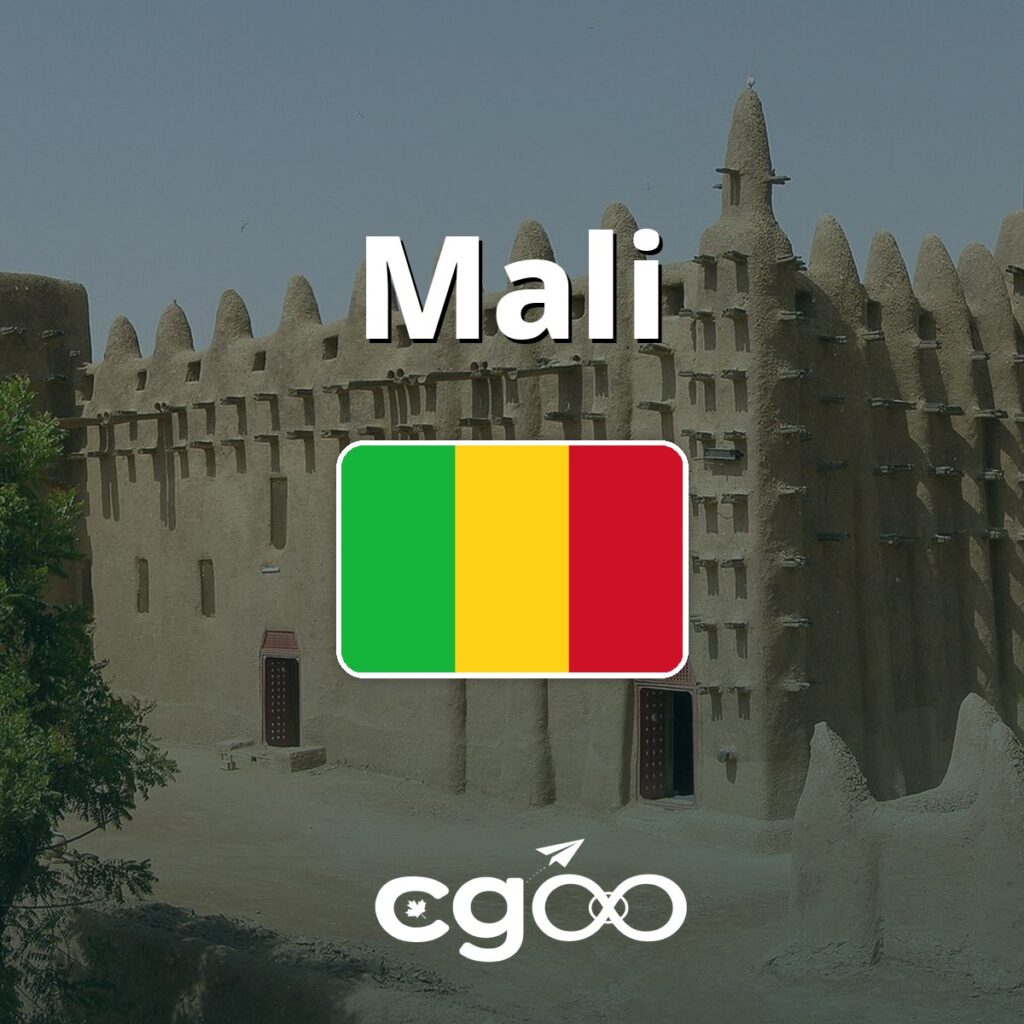
Mali

Mali
Mali🇲🇱

Showing all 29 results

Traveling to Mali? Read This First.

Mali holds some of West Africa's greatest heritage — the mud mosques of Djenné, the Bandiagara cliffs and the Niger River towns — but travel here carries serious risks that must come first. Read the safety card below before any other planning, and install your CGOO eSIM before you fly so you stay reachable and informed throughout.

Choose the Plan That Fits Your Trip

  • Fixed data or unlimited: pick from the plan grid above by trip length and data use — fixed-data plans for maps, messaging and light browsing, unlimited plans for heavy use and hotspotting.
  • Instant delivery: your QR code and installation link are emailed within minutes of checkout. Install before your flight; validity starts on the day you activate.
  • Coverage note: coverage is strongest in Bamako and the main southern towns and thins fast outside them — download offline maps before you leave the city.

Travel Highlights

  • Djenné: the Great Mosque, the world's largest mud-brick building, and its Monday market.
  • Bandigara cliffs: the Dogon Country escarpment, villages and cliff dwellings — visit only with a trusted local guide and current advice.
  • Bamako: the National Museum, the Grand Marché and the Niger River waterfront in the capital.
  • Ségou: a relaxed Niger River town known for mud-cloth workshops and river pirogues.
  • Niger River: the lifeblood of southern Mali, from Bamako's port to the river towns downstream.

Getting Around

  • Ride-hailing in Bamako: the Heetch app operates in Bamako; elsewhere, use hotel-called or rank taxis with the fare agreed before you set off, as taxis are not metered.
  • Airport to the city: from Bamako airport, use a pre-booked hotel car or an official airport taxi and agree the fare first; avoid unmarked cars inside the terminal.
  • City transport: sotramas (shared minibuses) and shared taxis cover Bamako cheaply but are crowded and slow.
  • Between cities: buses and shared minibuses run the main southern routes, but check current advisories before any intercity travel and avoid night travel.

Safety and Practical Tips

Many governments advise against all travel to Mali, including Bamako, because of the high threat of terrorist attack and kidnapping — read your government's current advice before you go, and do not travel to the north or centre of the country.

If you travel despite the advice, move only with trusted local contacts, avoid crowds and night travel, keep a low profile, and carry a yellow fever vaccination certificate, which is mandatory for entry.

Entry and Visa

Entry rules depend on your passport. Most visitors must arrange a visa before travel, now applied for online through the Malian Ministry of Foreign Affairs, and a yellow fever vaccination certificate is mandatory for entry.

Weather and Climate

  • Cool dry season (November to February): the most comfortable months, with warm days and cooler nights.
  • Hot season (March to May): the hottest time of year, often well above 35°C in Bamako and hotter in the north.
  • Rainy season (June to October): lower temperatures and higher humidity, with heavy downpours in the south.
  • North: desert-dry year-round, with extreme heat and the harmattan wind blowing dust in the dry months.

Money and Payments

  • Currency: the West African CFA franc (XOF) — cash is the default for taxis, markets and transport.
  • Cards: accepted at a few larger hotels in Bamako, but rarely anywhere else — do not rely on a card outside the capital's main hotels.
  • ATMs: available in Bamako; stock up before leaving the capital, as cash machines are scarce elsewhere.
  • Wise: works wherever Visa or Mastercard is accepted — it does not replace the cash you will need day to day.