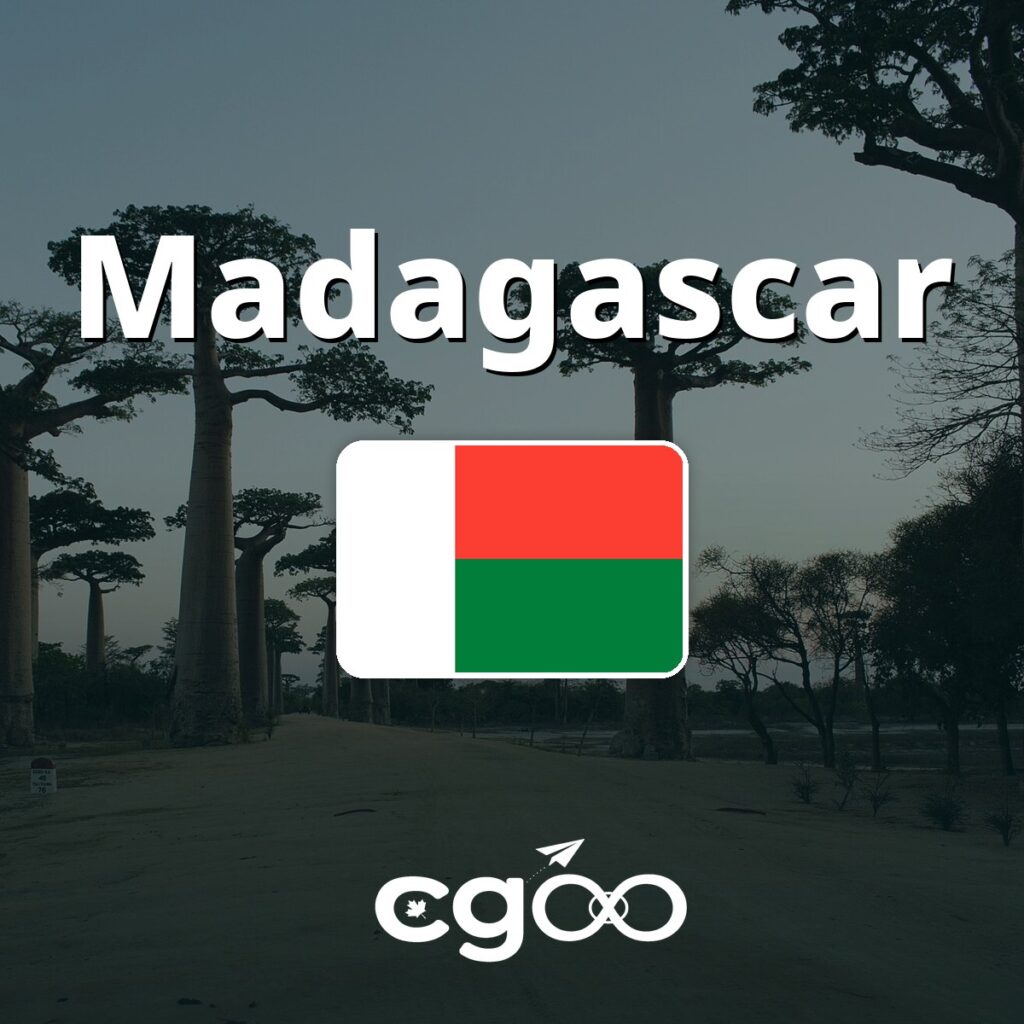
Madagascar

Madagascar
Madagascar🇲🇬

Showing all 30 results

Traveling to Madagascar? Land Connected.

Madagascar is a continent in miniature — baobabs, lemurs, highland rice terraces and long empty beaches — but the roads between them are slow and the towns are far apart. Install your CGOO eSIM before you fly and you have maps, translation and bookings working from the moment you land, without hunting for a SIM shop at Ivato airport.

Choose the Plan That Fits Your Trip

  • Fixed data or unlimited: pick from the plan grid above by trip length and data use — fixed-data plans for maps, messaging and light browsing, unlimited plans for heavy use and hotspotting.
  • Instant delivery: your QR code and installation link are emailed within minutes of checkout. Install before your flight; validity starts on the day you activate.
  • Coverage note: coverage is strongest in Antananarivo, Nosy Be and the main towns and thins fast on rural and highland roads — download offline maps before you leave the city.

Travel Highlights

  • Avenue of the Baobabs: the famous baobab-lined dirt road near Morondava, best at sunrise or sunset.
  • Andasibe-Mantadia: rainforest walks to hear the indri, Madagascar's largest lemur, calling at dawn.
  • Isalo National Park: sandstone canyons, natural pools and grassland walks in the south.
  • Nosy Be: island beaches, diving and day trips to Nosy Komba and Nosy Tanikely.
  • Tsingy de Bemaraha: a jagged limestone forest of pinnacles, reached by rough roads and best with a guide.

Getting Around

  • Airport to the city: from Ivato airport, take an official airport taxi or a pre-booked hotel transfer and agree the fare before you set off — taxis are not metered and payment is cash in ariary.
  • No international ride-hailing app: Uber and Bolt are not widely available in Antananarivo — rely on cream-coloured street taxis with the fare agreed first, or a hotel-called car.
  • City transport: taxi-be minibuses run fixed routes in Antananarivo and are the cheapest way around, but they are crowded and confusing for first-time visitors.
  • Between towns: taxi-brousse shared minibuses connect the regions slowly and only when full; for national parks and the south, a 4x4 with a local driver is the practical choice on rough roads.

Safety and Practical Tips

Petty crime is the main risk in Antananarivo — bag-snatching and pickpocketing around markets and bus stations — so keep valuables out of sight, avoid walking alone after dark, and use a hotel-called taxi at night.

Roads are rough and slow outside the capital, and the cyclone season runs roughly November to April — check forecasts before island or coastal trips, and carry cash in small ariary notes, as cards are rarely accepted outside larger hotels.

Entry and Visa

Entry rules depend on your passport. Almost all visitors need a visa, available as an eVisa arranged online before travel or on arrival at Madagascar's international airports; carry a passport valid for at least six months and a return or onward ticket.

Weather and Climate

  • Dry season (May to October): the most comfortable time to travel — cooler, drier days, best for parks and hiking.
  • Wet season (November to April): hot and humid with heavy rain, and cyclone risk on the coasts — some roads and parks become hard to reach.
  • Antananarivo: highland temperatures are mild year-round, roughly 15–25°C, cooler at night in the dry season.
  • Coasts: warmer and more humid than the highlands, roughly 25–30°C, with Nosy Be and the west coast hottest in the wet season.

Money and Payments

  • Currency: the Malagasy ariary (MGA) — cash is king, and small notes are essential for taxis, markets and rural shops.
  • Cards: accepted at larger hotels and some restaurants in Antananarivo and Nosy Be, but rarely anywhere else — do not rely on a card outside the main towns.
  • ATMs: available in Antananarivo and the main towns; stock up before heading to parks or rural areas.
  • Wise: works wherever Visa or Mastercard is accepted — it does not replace the cash you will need day to day.