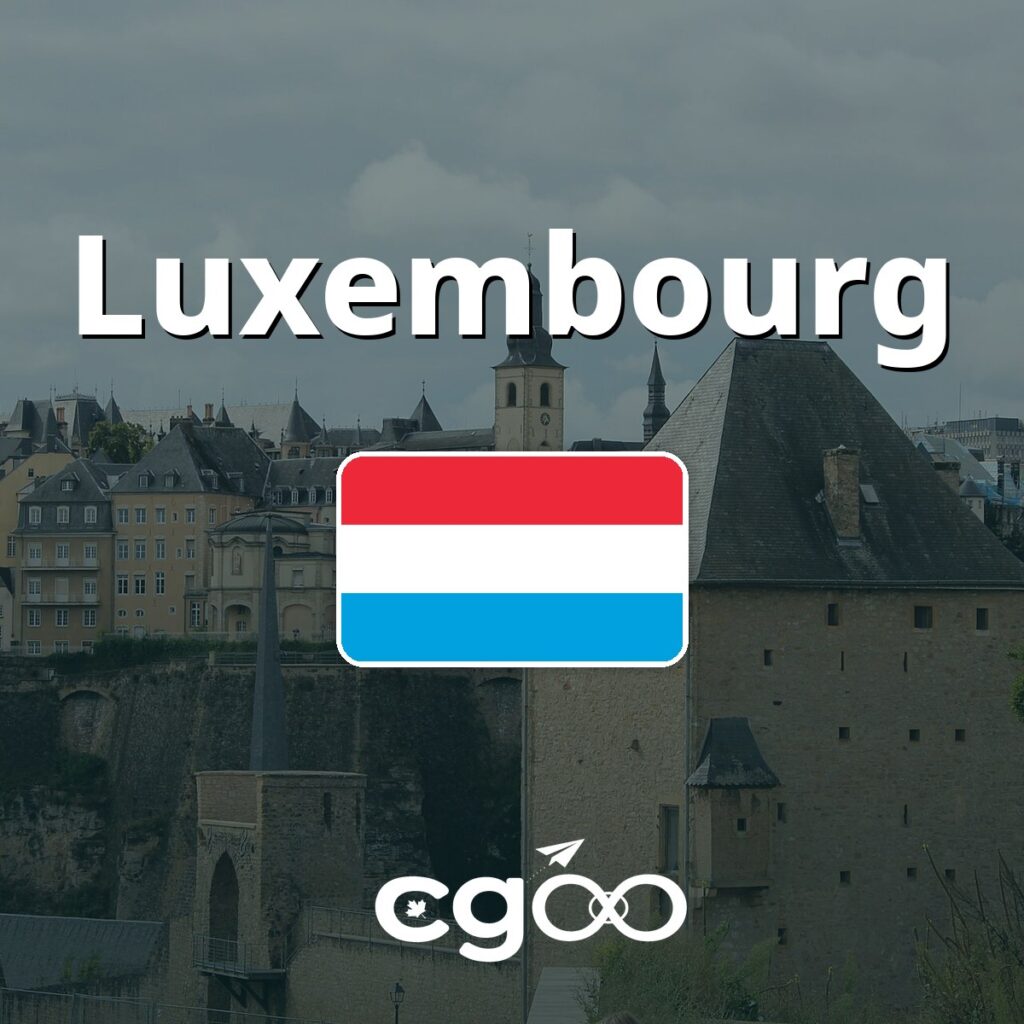
Luxembourg

Luxembourg
Luxembourg🇱🇺

Showing all 31 results

Traveling to Luxembourg? Land Connected.

Luxembourg packs a fortified old town, deep river gorges and wine villages into one of Europe's smallest countries — and every bus, tram and train in it is free. Install your CGOO eSIM before you fly and you connect at Luxembourg Airport on arrival without hunting for a SIM shop, and your own number stays reachable for calls and texts back home.

Choose the Plan That Fits Your Trip

  • Fixed data or unlimited: pick from the plan grid above by trip length and data use — fixed-data plans for maps, messaging and light browsing, unlimited plans for heavy video, navigation and hotspot use.
  • Instant delivery: your QR code and installation link are emailed within minutes of checkout. Install before your flight; validity starts on the day you activate.
  • Good to know: your phone must support eSIM (dial *#06# and look for an EID), and your 15-digit IMEI is required at checkout so your eSIM can be provisioned.

Travel Highlights

  • Luxembourg Old Town: the UNESCO-listed fortifications — the Bock Casemates, the Chemin de la Corniche walkway, and the Pfaffenthal Lift down to the Grund.
  • Vianden Castle: the restored hilltop castle in the Ardennes, one of the country's best day trips.
  • Mullerthal Trail: the 'Little Switzerland' region of sandstone gorges, forests and rock formations, best on foot.
  • Moselle wine villages: riverside towns such as Remich and Grevenmacher, with local white wines and river cruises.
  • Esch-sur-Alzette: the second city, with its industrial heritage, museums and a livelier, less touristy feel than the capital.

Getting Around

  • Airport to the city: Luxembourg Airport (LUX) connects to the centre by bus (lines 16 and 29) in about 20–30 minutes; taxis wait outside arrivals.
  • Free public transport: since March 2020 all buses, trams and trains in Luxembourg are free for everyone — no ticket needed, just board. The Mobiliteit.lu app is the official journey planner.
  • Ride-hailing — limited but available: the Uber app books licensed taxis in Luxembourg, and Bolt also operates in Luxembourg City. With free public transport, most visitors rarely need a taxi — but fares are metered and higher than in most European cities.
  • Getting out of town: trains and buses reach Vianden, the Moselle and the Ardennes easily; a car is only really needed for the most rural trails.

Safety and Practical Tips

Luxembourg is very safe for visitors, with low violent crime. Take normal care against pickpockets around the central station and on busy buses, and keep your phone charged for maps.

Cycling is popular but the old town is hilly — watch for steep drops and cobbles in wet weather, and use lights at night.

Entry and Visa

Visa rules depend on your passport. Luxembourg is in the Schengen area: many passports enter visa-free for up to 90 days in any 180-day period; other nationalities need a Schengen short-stay visa applied for before travel. Carry your passport — police may ask for ID.

Official information: Travel to Europe (EU).

Weather and Climate

  • Four distinct seasons: mild summers and cold, damp winters. Broad monthly averages run around 1°C in January and 19°C in July in Luxembourg City.
  • Best months for the outdoors: late spring to early autumn, when the Mullerthal trails and Moselle villages are at their best.
  • What to pack: light layers and rain protection for summer, a warm waterproof coat for winter, and comfortable shoes for the old town's hills and cobbles.
  • Rain year-round: showers can arrive in any month — a compact umbrella earns its place in your bag.

Money and Payments

  • Currency and cards: euros (EUR). Cards are widely accepted in Luxembourg City, hotels and restaurants; contactless is common. Cash is rarely needed, since public transport is free.
  • WISE and similar travel cards — yes, supported: the Wise card works wherever Visa or Mastercard is accepted, and a Wise EUR balance means you spend euros without converting each time. Similar multi-currency cards work the same way.
  • Tipping: rounding up is common; 10% for good restaurant service is appreciated but not expected. Taxi drivers are usually rounded up.
  • Cash tips: use ATMs in town rather than airport exchange counters, which usually give worse rates, and always choose to pay in euros (local currency) if a terminal offers conversion.