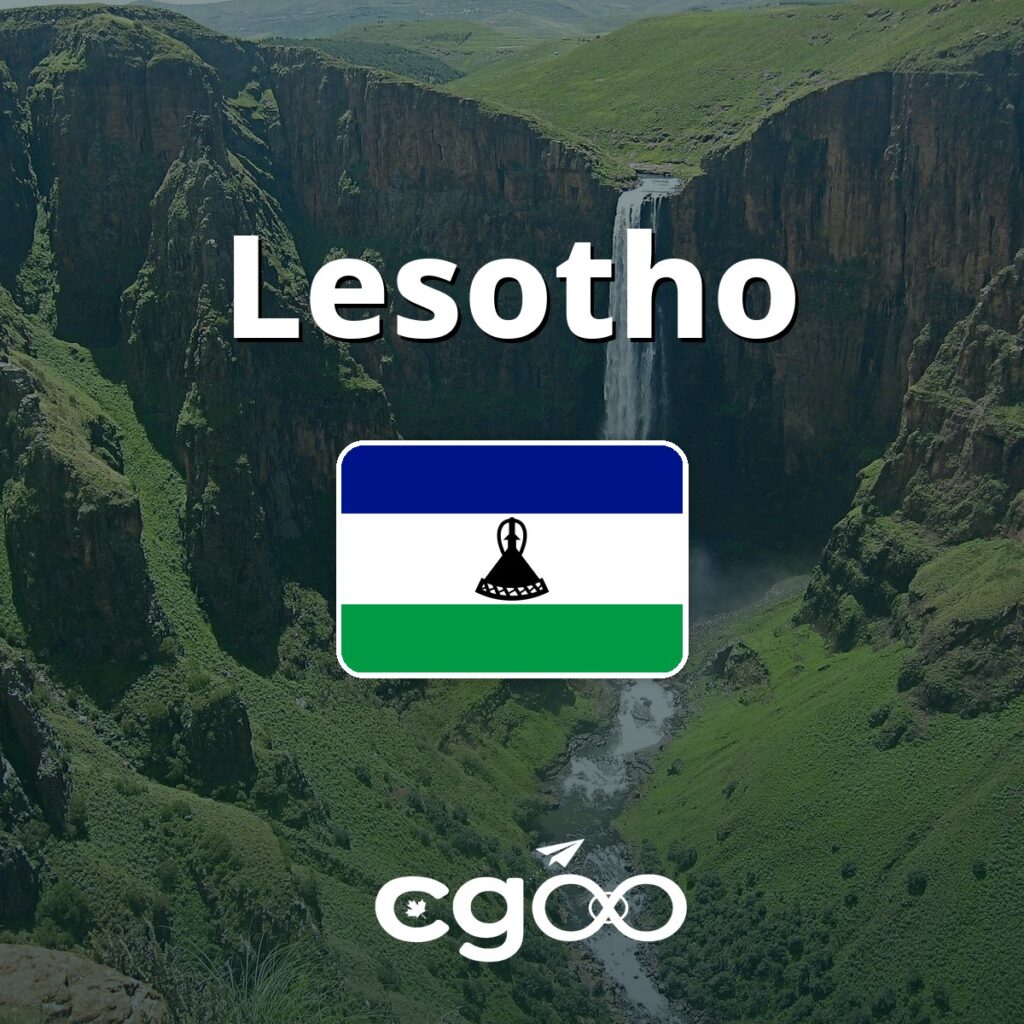
Lesotho

Lesotho
Lesotho🇱🇸

Showing all 21 results

Traveling to Lesotho? Land Connected.

Lesotho is the mountain kingdom entirely above 1,000 metres — high passes, pony trekking and a capital that still feels like a small town. Install your CGOO eSIM before you fly and you connect at Maseru airport without hunting for a SIM shop, and your own number stays reachable for calls and texts back home.

Choose the Plan That Fits Your Trip

  • Fixed data or unlimited: pick from the plan grid above by trip length and data use — fixed-data plans for maps, messaging and light browsing, unlimited plans for heavy use and hotspotting.
  • Instant delivery: your QR code and installation link are emailed within minutes of checkout. Install before your flight; validity starts on the day you activate.
  • Coverage note: coverage is strongest in Maseru and the lowland towns and thins fast in the highlands — download offline maps before you head into the mountains.

Travel Highlights

  • Maletsunyane Falls: the 192-metre waterfall near Semonkong, with abseiling for the brave and pony treks to the base.
  • Sani Pass: the switchback climb from KwaZulu-Natal into the highlands, 4x4 only above the South African border post.
  • Thaba Bosiu: the mountain fortress of King Moshoeshoe I, the founding site of the Basotho nation.
  • Katse Dam: the highlands water scheme — dam-wall tours and a dramatic mountain setting.
  • Sehlabathebe National Park: remote grasslands, rock paintings and trout streams in the far south-east.

Getting Around

  • Airport: Moshoeshoe I International Airport (MSU) sits outside Maseru — hotel cars and pre-booked transfers meet most flights, and Airlink links Johannesburg with Maseru.
  • Ride-hailing: internationally recognised app-based ride-share services do not operate in Lesotho — use registered taxis and transfer services, preferably arranged by your hotel, and avoid hailing taxis on the street.
  • Minibus taxis: 4+1 minibus taxis handle short hops in Maseru and nearby towns, and long-distance coaches link Maseru with Johannesburg and Bloemfontein.
  • Driving: a 4x4 is recommended for the highlands, where many roads are gravel and mountain tracks, fuel stations are scarce, and Sani Pass is 4x4 only.

Safety and Practical Tips

Crime — including robbery — happens in Maseru, especially after dark, so use hotel-arranged transport at night, keep valuables out of sight and avoid travelling by overloaded bus or taxi where you can.

Altitude and mountain weather catch visitors out: nights are cold even in summer, snow closes high passes in winter, and medical facilities outside Maseru are limited, so pack warm layers, carry any medication you need and comprehensive travel insurance.

Entry and Visa

Entry rules depend on your passport: many visitors — including citizens of the United States, the United Kingdom and the European Union — enter visa-free, while others need a visa arranged before travel. Check the current visa, passport-validity and onward-travel requirements for your passport before you fly.

Weather and Climate

  • Lowlands (Maseru): warm summers, broadly around 25–28°C, and cold winters with frosty nights.
  • Highlands: cooler all year, with snow possible in winter and passes sometimes closed.
  • Rain: most rain falls from October to April, often as afternoon thunderstorms.
  • Best window: October to April is the greenest and most comfortable time for most trips; winter suits snow and clear mountain air if you are equipped for the cold.

Money and Payments

  • Currency: the loti (LSL) is the official currency, pegged one-to-one to the South African rand, which is also widely accepted.
  • Cards: cards are accepted at larger hotels and shops in Maseru, but cash is essential for minibus taxis, markets and highland villages.
  • Wise: Wise works wherever Visa or Mastercard is accepted; there is no local-currency balance claim here.
  • ATMs: ATMs are concentrated in Maseru and the lowland towns — withdraw enough cash before heading into the highlands.