India

India
India🇮🇳

Showing all 31 results

Traveling to India? Land Connected.

India is intense, generous and unforgettable — and much easier with data from the moment you land: ride-hailing, train bookings, maps and translation all assume you are online. Install your CGOO eSIM before you fly and skip the airport SIM paperwork — no roaming bill, and your own number stays reachable for calls and texts back home.

Choose the Plan That Fits Your Trip

  • Fixed data: 1 GB to 100 GB, valid 3 to 90 days — from a quick Golden Triangle loop to a long subcontinent journey.
  • Unlimited & Unlimited Plus: 1 to 30 days at full 4G/5G speeds. A fair usage policy applies — in rare cases speeds may be reduced after 1 GB of use in a day, and full speed resumes the next day.
  • Networks: plans run on major Indian carriers including Airtel India (5G), Bharti Airtel (5G), Reliance JIO (4G) and Vodafone Idea (4G). The exact carrier and speed for each plan are listed in its Plan details, right on the plan.
  • Instant delivery: your QR code and installation link are emailed within minutes of checkout. Install before your flight; validity starts on the day you activate.
  • Good to know: your phone must support eSIM (dial *#06# and look for an EID), and your 15-digit IMEI is required at checkout so your eSIM can be provisioned.

Travel Highlights

  • Delhi: the Red Fort and the lanes of Old Delhi, then Lutyens' avenues and Humayun's Tomb on the other side of the city.
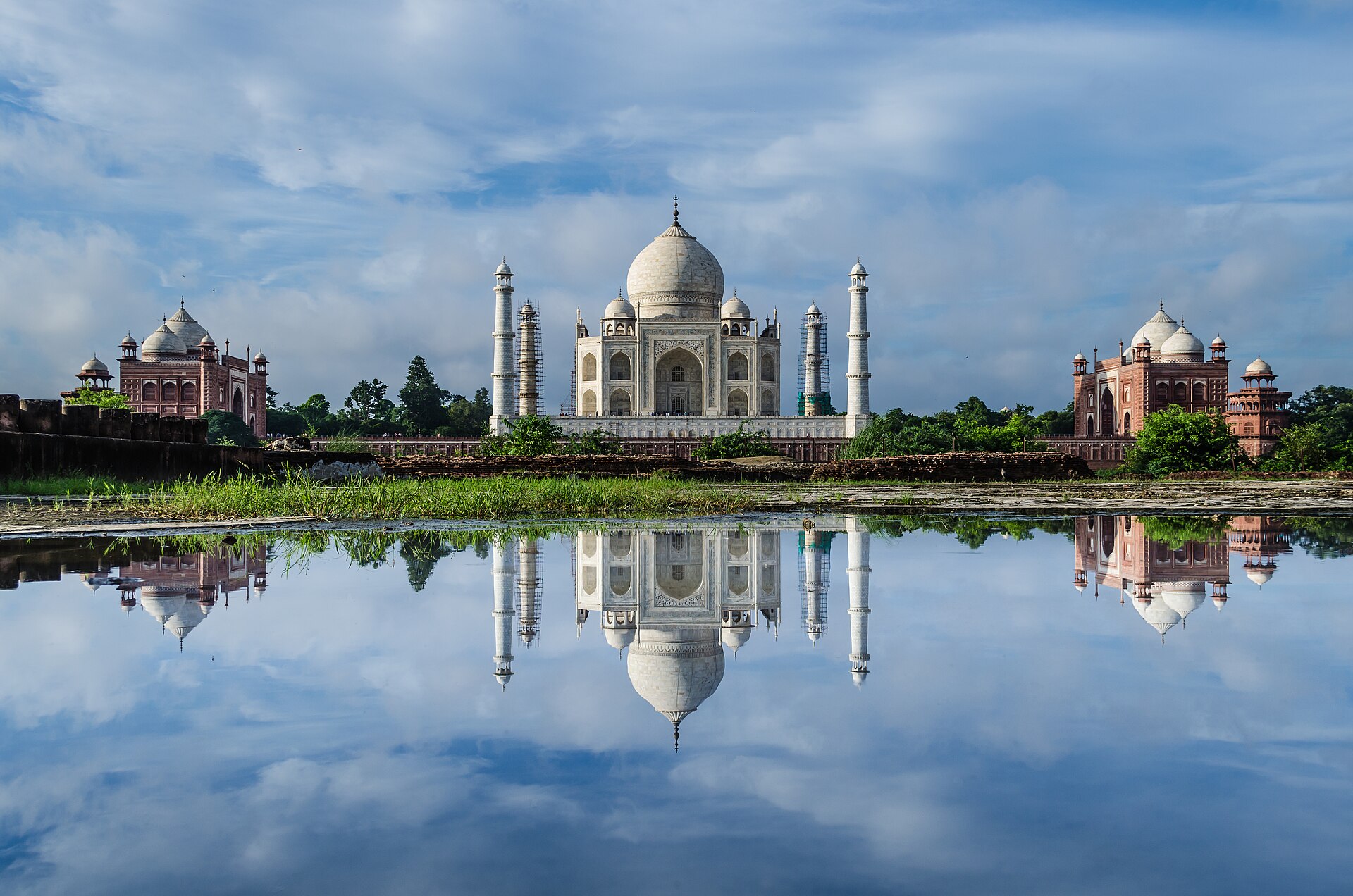
  • Agra: the Taj Mahal at sunrise, before the heat and the crowds — Agra Fort is worth the extra hour.
  • Jaipur: the Amber Fort above the Pink City, the Hawa Mahal, and bazaars built for getting happily lost.
  • Kerala: a houseboat night on the Alleppey backwaters, tea hills in Munnar and some of India's best food.
  • Goa: Portuguese-era churches in Old Goa, then slow beach days from Palolem to Arambol.

Getting Around

  • Airport to city: Delhi's Indira Gandhi International Airport (DEL) is linked to the city by the Airport Express metro, prepaid taxis from counters inside arrivals, app-based pick-ups and hotel transfers. The prepaid counter inside the terminal is generally the least stressful first-arrival option, as it fixes the fare in advance and avoids touts outside arrivals.
  • City transport: Delhi has an extensive metro system, which is the most reliable way to cross the city, plus buses, auto-rickshaws and cycle-rickshaws for shorter trips. Metro trains have women-only carriages; buses can be very crowded and are less straightforward for first-time visitors than the metro or a ride-hailing app.
  • Ride-hailing: Uber and Ola are the main ride-hailing apps in Delhi and other major Indian cities, with car, auto-rickshaw and, in some cities, motorcycle options, fares shown in advance in the app, and cash or in-app digital payment. Rapido is also reported in cities such as Mumbai. Verify the driver, car and number plate against the app before getting in, and confirm the exact pick-up point at airports and stations.
  • Taxis and longer trips: Traditional taxis and auto-rickshaws should be metered or have the fare agreed before departure; if a driver claims the meter is broken, take another vehicle. For longer journeys, domestic flights, intercity trains and air-conditioned buses link major cities, and hiring a car with a driver, booked through a hotel or agency, is a common option for multi-stop sightseeing.

Safety and Practical Tips

India rewards a little street sense. Use ride-hailing apps or prepaid official taxis where you can, agree any other fare before you set off, and keep an eye on your belongings in crowded stations, markets and festivals. Traffic is chaotic — cross streets patiently, with the flow of locals.

Drink sealed bottled or filtered water, ease into the spice, and dress modestly at temples and mosques, covering shoulders and knees. Carry small notes for tips and rickshaws, and keep a photo of your passport and visa on your phone.

Entry and Visa

Visa rules depend on your passport. Many nationalities can apply online for an Indian e-Visa before travel, while others need a regular visa from an Indian mission — and the permitted length of stay and entries vary. Apply only through the official Government of India visa portal, and check the latest requirements for your passport well before you fly.

Official information: Government of India — e-Visa portal.

Weather and Climate

  • Climate zones: India spans tropical conditions in the south, humid subtropical and temperate conditions in the north, arid desert in the west (Rajasthan), and highland and alpine conditions in the Himalayas, so a single India-wide weather summary does not apply. The country broadly follows three seasons — hot (March to June), monsoon (June to September) and cool and dry (October to March) — with timing varying by region.
  • Delhi by month: Delhi's daytime highs range from about 21°C in January to about 41°C in May and June, falling to about 34–36°C during the monsoon months of July and August, with overnight lows from about 10°C in January to about 29–31°C in June and July. Winter days are mild, but January can bring cold spells and heavy fog that disrupts air, road and rail travel.
  • Rainfall: Delhi's rain falls mainly during the summer monsoon from late June to September, with July usually the wettest month; November is typically the driest month. A single authoritative annual total for Delhi is because published July figures alone range widely by source, but the pattern — dry winter, very hot pre-monsoon summer, wet monsoon — is consistent across sources.
  • Best months and packing: October to March is the best window for most of India, with October and November and February and March often singled out for Delhi, when days are warm and nights are cool. Pack light cotton clothing, sun protection and a hat for the hot season, a rain jacket and waterproof footwear for the monsoon, and layers plus a warm jacket for northern winters and hill stations.

Money and Payments

  • Currency: The currency is the Indian rupee (INR, ₹). Cash remains essential in India, even for visitors who mainly pay digitally, because small vendors, temples, rural areas and some transport still operate in cash, and network or power outages can interrupt digital payments.
  • Cards, UPI and contactless: Visa and Mastercard are widely accepted at hotels, mid-range and larger restaurants and larger retailers in major cities, but much of everyday India runs on UPI, India's instant-payment system, using merchant QR codes that foreign bank cards cannot normally scan. A single India-wide contactless limit for foreign cards is; visitors who want QR-code access should investigate a visitor UPI option such as UPI One World before travel rather than assuming a home card will work everywhere.
  • Tipping: Tipping is appreciated but not mandatory in India. In restaurants, around 5–10% is customary if no service charge has been added; if a service charge is already on the bill, no further tip is expected. Small cash tips for porters, housekeeping and drivers are customary, and rounding up an auto-rickshaw or taxi fare is common.
  • Multi-currency cards and DCC: Multi-currency cards such as Wise and Revolut are reported as useful at card terminals and ATMs in major Indian cities, where they offer mid-market exchange rates, but they do not scan UPI QR codes or act as a UPI wallet, so they are not a substitute for cash or a visitor UPI solution at QR-only stalls. At ATMs and card terminals, always choose INR rather than your home currency to avoid Dynamic Currency Conversion (DCC) mark-ups, keep a reserve of small notes, and keep a back-up card separate from the main card.