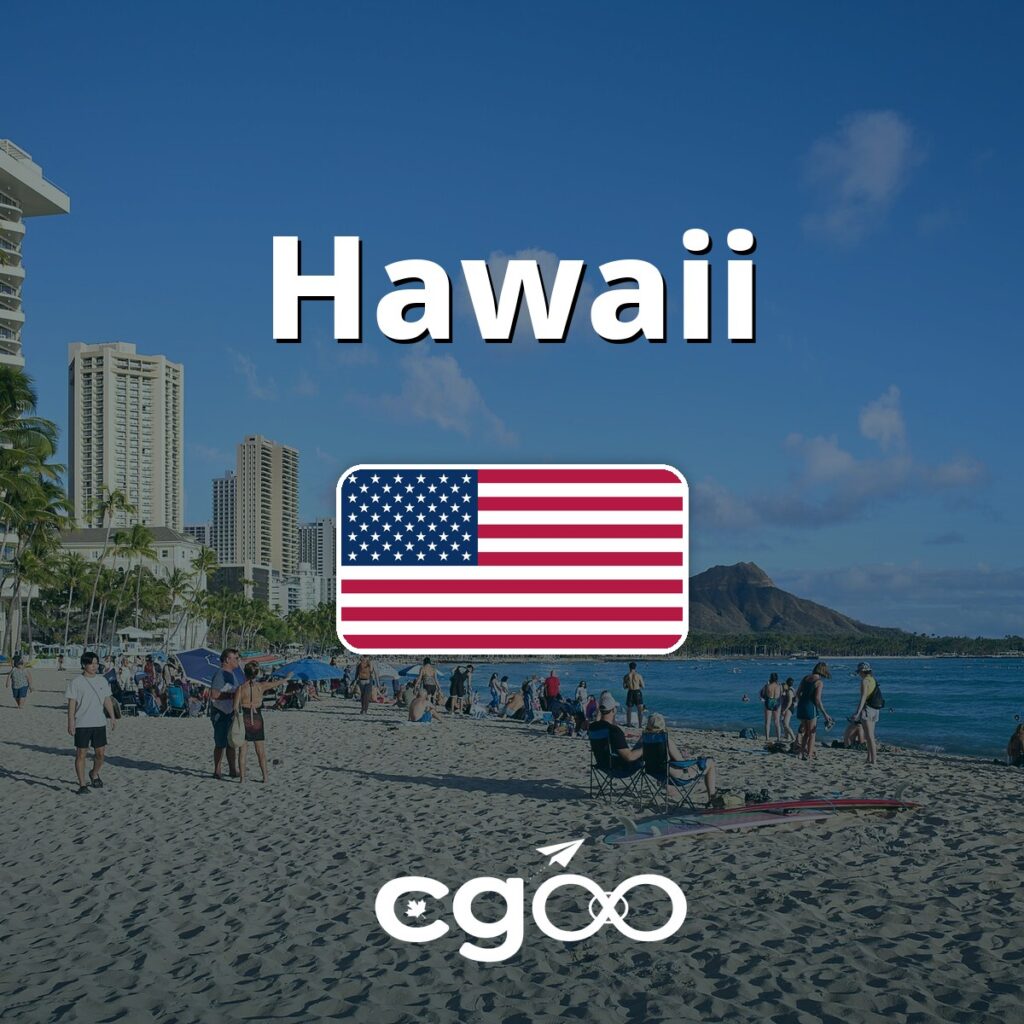
Hawaii

Hawaii
Hawaii🇺🇸

Showing all 29 results

Traveling to Hawaii? Land Connected.

Hawaii is six islands in one trip — Waikiki surf, volcanoes, rainforest valleys and the road to Hāna — and the best days are planned around driving, so install your CGOO eSIM before you fly and you connect the moment you land, with maps and directions in your pocket from the start.

Choose the Plan That Fits Your Trip

  • Fixed data or unlimited: pick from the plan grid above by trip length and data use — fixed-data plans for maps, messaging and light browsing, unlimited plans for heavy use and hotspotting.
  • Instant delivery: your QR code and installation link are emailed within minutes of checkout. Install before your flight; validity starts on the day you activate.
  • Good to know: your phone must support eSIM (dial *#06# and look for an EID), and your 15-digit IMEI is required at checkout so your eSIM can be provisioned.

Travel Highlights

  • Waikiki and Diamond Head: Honolulu's classic beach and the crater hike above it, best early in the morning before the heat and the crowds.
  • Pearl Harbor: the USS Arizona Memorial and the museums at Pearl Harbor — book tickets in advance, as same-day slots go fast.
  • Hawai'i Volcanoes National Park: lava fields, steam vents and the Kīlauea caldera on the Big Island; check current conditions before you go, as access changes with volcanic activity.
  • Road to Hāna (Maui): waterfalls, black-sand beaches and rainforest bends along the coastal highway — start early and plan fuel and food stops.
  • Nā Pali Coast (Kaua'i): sea cliffs best seen by boat or helicopter, or on foot along the Kalalau Trail for experienced hikers.

Getting Around

  • Airports: Daniel K. Inouye International Airport (HNL) serves Honolulu; Kahului (OGG) on Maui, Līhu'e (LIH) on Kaua'i and Kona (KOA) on the Big Island handle the other islands. Inter-island flights are the usual way to hop between islands.
  • Ride-hailing — Uber, Lyft and Holoholo: Uber and Lyft operate in Honolulu and other larger towns, and the local Holoholo app books rides and tours; coverage thins fast outside towns and in remote areas, where cell reception can also drop out.
  • Public transport: O'ahu's TheBus covers most of the island including the North Shore and Pearl Harbor; on the neighbor islands buses are limited, so rental cars or tour buses cover most sights.
  • Driving: a rental car is the most flexible option outside Honolulu, especially for the Big Island's distances; traffic drives on the right, and parking in Waikiki and at popular trailheads fills early.

Safety and Practical Tips

Hawaii is generally safe for visitors. The main risks are in the ocean — strong currents, shore break and surf at exposed beaches — so swim at lifeguarded beaches, watch warning signs and never turn your back on the waves. Sun is strong all year: reef-safe sunscreen, a hat and water are essential on hikes.

Hiking trails can be steep, muddy and exposed, and weather changes fast in the mountains — carry water, a charged phone and a rain layer, and stay on marked trails. Flash floods can close valleys and trails after heavy rain, so check conditions before you set out.

Entry and Visa

Hawaii is a US state, so the same entry rules as the mainland United States apply. Visa rules depend on your passport — many nationalities enter under the Visa Waiver Program with an approved ESTA, while others need a US visa applied for before travel. Check the current requirements for your passport before you book, and make sure your passport is valid well beyond your trip.

Weather and Climate

  • Warm all year: Honolulu averages broadly around 24°C in January and 28°C in August, with trade winds keeping the coasts comfortable — pack light clothes plus a layer for higher ground.
  • Wet and dry seasons: November to April is wetter, especially on windward coasts and in the mountains; May to October is drier and sunnier.
  • Microclimates: leeward sides (Waikiki, Kona) are drier and sunnier, while windward sides (Hilo, the North Shore in winter) are wetter — rain on one side of an island often means sun on the other.
  • What to pack: swim gear, reef-safe sunscreen, walking shoes for trails, and a light rain jacket for mountain and rainforest days.

Money and Payments

  • Currency: the US dollar (USD) is the local currency. Cards are widely accepted in shops, restaurants, hotels and transport.
  • Wise and similar travel cards — yes, supported: the Wise card works in Hawaii wherever Visa or Mastercard is accepted, and a Wise USD balance means you spend dollars without converting each time.
  • Cash: carry a little cash for farmers' markets, food trucks and small vendors, and for tips.
  • ATMs: ATMs are easy to find in towns and at airports; stock up before heading to remote trailheads or rural coasts.