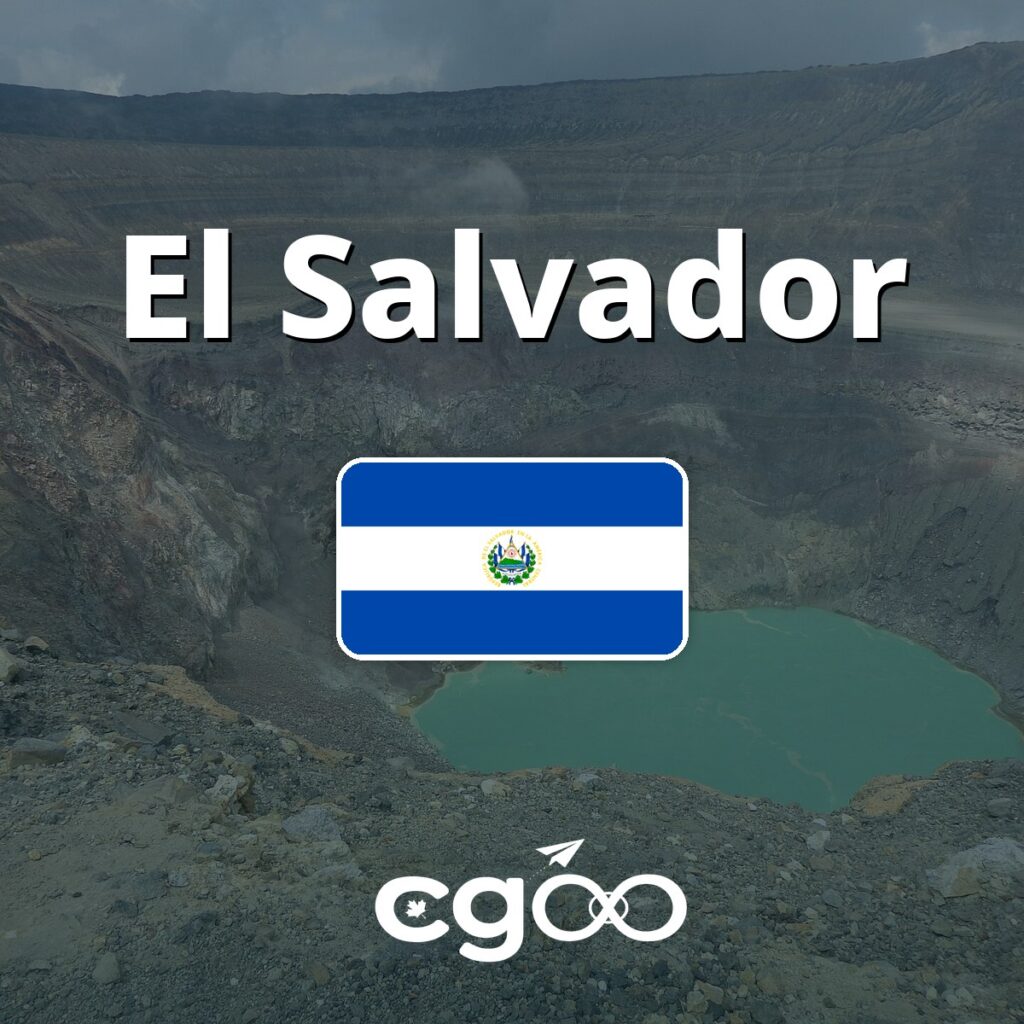
El Salvador

El Salvador
El Salvador🇸🇻

Showing all 21 results

Traveling to El Salvador? Land Connected.

El Salvador packs volcanoes, black-sand surf beaches, Mayan ruins and a flower-route of coffee towns into the smallest country in Central America — and most of it is a few hours' drive from the capital. Install your CGOO eSIM before you fly and you connect the moment you land, so airport pickups, surf-town shuttles and restaurant bookings are all handled on your own phone, not on airport Wi-Fi.

Choose the Plan That Fits Your Trip

  • Fixed data or unlimited: pick from the plan grid above by trip length and data use — fixed-data plans for maps, messaging and light browsing, unlimited plans for heavy use and hotspotting.
  • Instant delivery: your QR code and installation link are emailed within minutes of checkout. Install before your flight; validity starts on the day you activate.
  • Good to know: your phone must support eSIM (dial *#06# and look for an EID), and your 15-digit IMEI is required at checkout so your eSIM can be provisioned.

Travel Highlights

  • Santa Ana Volcano: the country's highest volcano, with a turquoise crater lake at the top — the classic guided day hike from the capital or Santa Ana city.
  • El Tunco and El Zonte: black-sand surf towns on the Pacific coast, with board rentals, surf schools and beachfront cafés.
  • Ruta de las Flores: a string of coffee towns — Juayúa, Apaneca, Ataco — with weekend food festivals, murals and mountain views.
  • Joya de Cerén: the UNESCO-listed 'Pompeii of the Americas', a Mayan farming village buried by volcanic ash, plus nearby San Andrés ruins.
  • Lake Coatepeque: a volcanic crater lake ringed by hills, popular for swimming, kayaking and lakeside restaurants.

Getting Around

  • Airport: El Salvador International Airport (SAL) is about 45 minutes from San Salvador; pre-booked transfers and app rides are the smoothest arrival options.
  • Ride-hailing — yes, in the capital: Uber operates in San Salvador, and DiDi is also used there. Outside the capital, coverage thins fast — use hotel taxis, pre-booked shuttles or rental cars for surf towns and the Ruta de las Flores.
  • Taxis: street taxis are unmetered, so agree the fare before you set off; app rides give you a price up front and are the easier option in the city.
  • Buses and driving: local buses are cheap but crowded and slow; rental cars suit the main highways, but rural night driving is best avoided.

Safety and Practical Tips

Security has improved markedly in recent years, but visitors should still stay alert: use app rides or hotel-arranged transport at night, avoid isolated areas after dark, and do not display expensive phones, cameras or jewellery in public.

Pacific surf beaches have strong currents and undertows — swim only at staffed beaches and heed local warnings. In the wet season, check road conditions before mountain drives, as landslides can close routes.

Entry and Visa

Entry rules depend on your passport. Many nationalities, including US, Canadian, UK and EU citizens, are admitted as visitors without a visa for short stays, but always check the current rules for your nationality before you book, and make sure your passport is valid well beyond your trip.

Weather and Climate

  • Tropical, with altitude: San Salvador sits at altitude, so daytime temperatures are broadly around 22–26°C all year; the Pacific coast is hotter and more humid.
  • Dry season: November to April is the driest window and the most popular time to visit, with sunny days and cooler nights in the highlands.
  • Wet season: May to October brings afternoon rain, heaviest in the mountains — mornings are often clear, so plan hikes early.
  • What to pack: light clothes, a rain jacket for the wet season, swim gear, sunscreen, and sturdy shoes for volcano trails.

Money and Payments

  • Currency: the US dollar (USD) is the official currency, so US visitors need no conversion at all; prices are quoted in dollars everywhere.
  • Cards: Visa and Mastercard are widely accepted in San Salvador and at larger hotels and restaurants; a Wise USD balance means you spend dollars without converting each time.
  • Cash: carry dollars for markets, buses, small towns and surf-town cafés, where cards are often refused — small notes are the most useful.
  • ATMs: ATMs are common in towns and cities; use ones inside banks or supermarkets and avoid isolated machines at night.