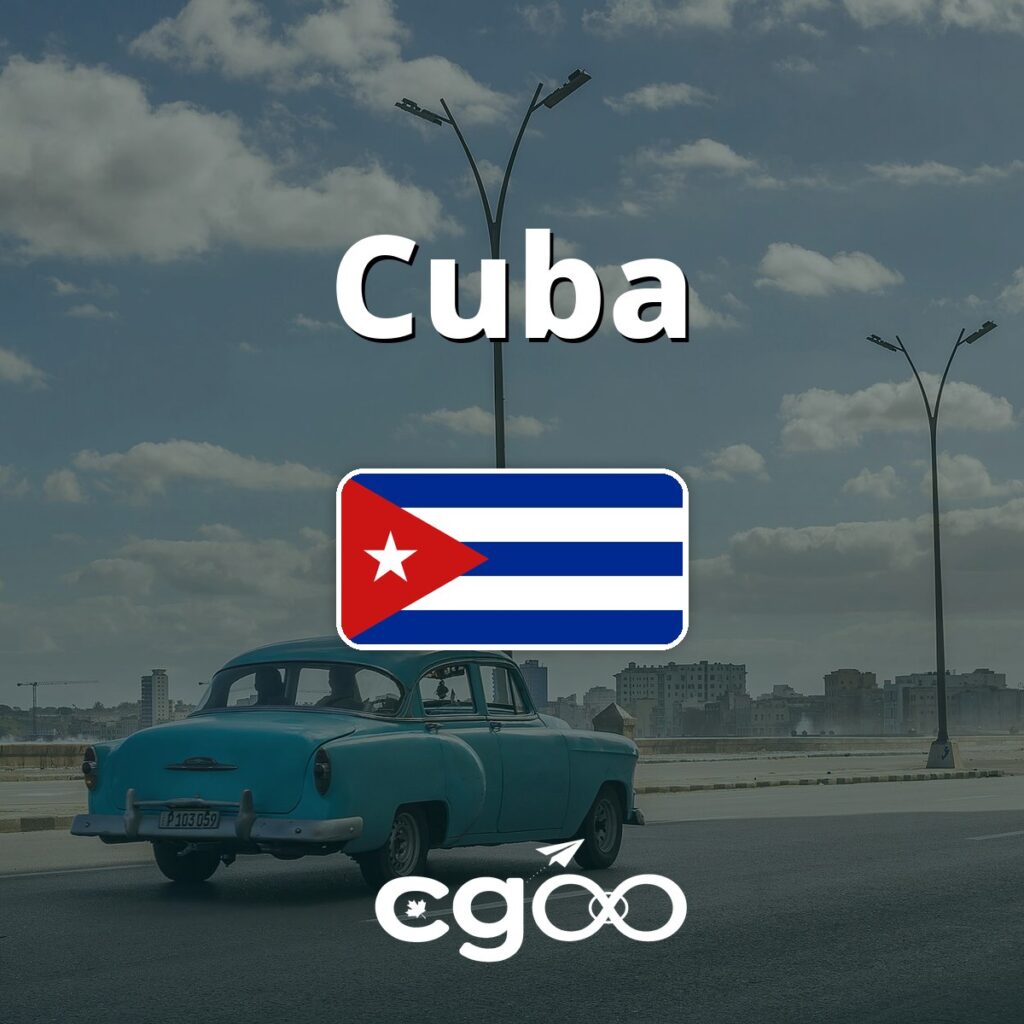
Cuba

Cuba
Cuba🇨🇺

Showing all 20 results

Traveling to Cuba? Land Connected.

Cuba runs on cash, patience and advance planning — classic cars and colonial squares in Havana, tobacco fields in Viñales, and beaches in Varadero, all in a country where card payments and app-based services are the exception. Install your CGOO eSIM before you fly and you connect the moment you land, so maps, casa bookings and transport contacts are all on your own phone, not on hotel Wi-Fi.

Choose the Plan That Fits Your Trip

  • Fixed data or unlimited: pick from the plan grid above by trip length and data use — fixed-data plans for maps, messaging and light browsing, unlimited plans for heavy use and hotspotting.
  • Instant delivery: your QR code and installation link are emailed within minutes of checkout. Install before your flight; validity starts on the day you activate.
  • Good to know: your phone must support eSIM (dial *#06# and look for an EID), and your 15-digit IMEI is required at checkout so your eSIM can be provisioned.

Travel Highlights

  • Old Havana: the restored colonial squares, the Malecón seafront, and the forts across the harbour at sunset.
  • Viñales Valley: limestone mogotes, tobacco farms and cave tours in western Cuba, best by day trip from Havana or overnight in a casa.
  • Trinidad: a preserved colonial town of cobbled streets and pastel houses, with nearby Playa Ancón for swimming.
  • Varadero: the long white-sand beach peninsula, lined with resorts and easy day trips from Havana.
  • Santiago de Cuba: the island's second city — Afro-Cuban music, the Castillo del Morro, and a livelier, less polished feel than Havana.

Getting Around

  • Airport to the city: from José Martí Airport (HAV), pre-arranged casa pickups and official state taxis are the reliable options; agree the fare before you set off.
  • Ride-hailing: Uber, Lyft and Bolt do not operate in Cuba. The local app La Nave is the Cuban equivalent, but it requires a Cuban SIM card and local number, and rides are paid in cash — most short-stay visitors will simply use taxis instead.
  • Taxis: official state taxis (Pantaxi and Taxi OK in Havana) are yellow, metered or fixed-fare; private classic cars are for tours, not cheap transport, and cost far more than a regular taxi.
  • Between cities: Viazul buses link the main cities on set schedules; for flexibility, hire a private driver through your casa host, and book at least a day or two ahead.

Safety and Practical Tips

Cuba is generally safe for visitors, but the cash-only economy shapes everything: bring enough euros or Canadian dollars for your whole trip, keep cash split between bags, and do not rely on ATMs or card payments, which are unreliable even where they exist.

Power and water outages happen, especially outside Havana — keep a charged phone and a power bank, download offline maps before you travel, and keep a paper copy of your passport and accommodation addresses.

Entry and Visa

Most visitors need a tourist card or e-visa arranged before travel, plus travel insurance, and should complete the customs declaration before arrival — check the current requirements for your nationality before you book, as rules differ by country. US visitors are subject to additional US government travel rules and must travel under an authorized category; check the current US rules before booking.

Weather and Climate

  • Year-round warmth: daytime highs are broadly around 27–30°C all year, with cooler evenings in winter.
  • Dry season: November to April is drier and the most comfortable time to visit.
  • Wet season: May to October brings afternoon showers and higher humidity.
  • Hurricane season: June to November — the risk peaks in August and September, so watch forecasts in those months.

Money and Payments

  • Currency: the Cuban peso (CUP) is the local currency. Bring euros or Canadian dollars in cash and exchange at official CADECA offices — do not rely on exchanging on arrival for everything, and carry small notes.
  • Cards: US-issued cards do not work anywhere in Cuba. Non-US cards work only at some hotel payment terminals and ATMs, never in taxis and not reliably — plan as if you had no card at all.
  • No Wise claim: no Wise balance or card claim is made for Cuba — international card networks are largely unusable on the island, so cash is essential.
  • Tipping: tip in pesos for good service at casas, restaurants and for drivers; small notes are appreciated and easier to change.