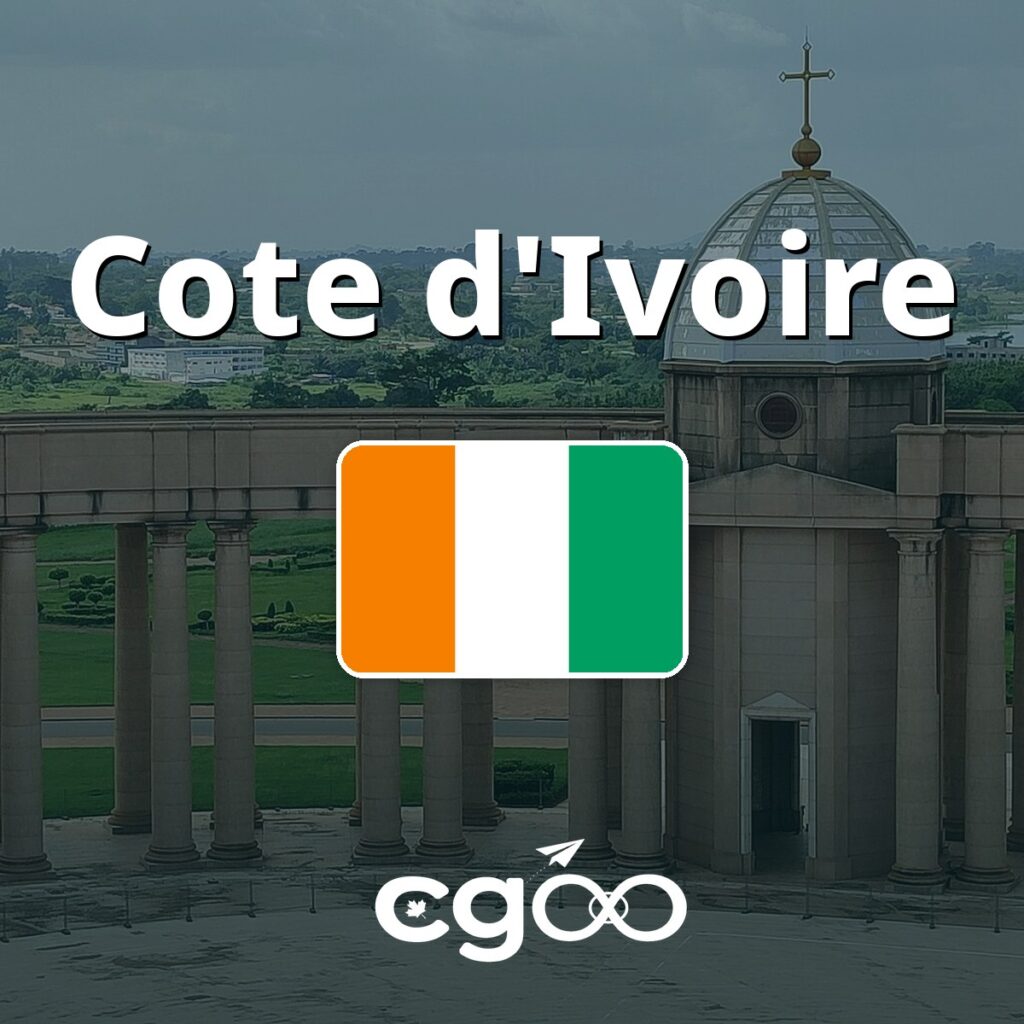
Cote d’Ivoire

Cote d'Ivoire
Cote d’Ivoire🇨🇮

Showing all 28 results

Traveling to Cote d'Ivoire? Land Connected.

Côte d'Ivoire pairs West Africa's most modern city with rainforest, colonial towns and a long Atlantic coast — and Abidjan's lagoon, markets and music scene are the draw. Install your CGOO eSIM before you fly so you are connected the moment you land, without hunting for a SIM shop.

Choose the Plan That Fits Your Trip

  • Fixed data or unlimited: pick from the plan grid above by trip length and data use — fixed-data plans for maps, messaging and light browsing, unlimited plans for heavy use and hotspotting.
  • Instant delivery: your QR code and installation link are emailed within minutes of checkout. Install before your flight; validity starts on the day you activate.
  • Coverage note: coverage is strongest in Abidjan and other cities and thins on rural roads — download offline maps before heading out.

Travel Highlights

  • Basilica of Our Lady of Peace: Yamoussoukro's vast basilica, one of the largest churches in the world, in the country's political capital.
  • Abidjan: the Plateau business district, the Ébrié Lagoon and the lively markets of Treichville and Adjamé.
  • Grand-Bassam: the former colonial capital east of Abidjan, with French-era buildings and a long Atlantic beach.
  • Taï National Park: one of West Africa's last great rainforests, in the south-west, home to chimpanzees and pygmy hippos.
  • Man and the west: waterfalls and forested mountains around Man, and the savanna of Comoé National Park in the north-east.

Getting Around

  • Airport: Félix-Houphouët-Boigny International Airport (ABJ) at Port-Bouët serves Abidjan, about 16 km from the city centre.
  • Ride-hailing: Yango and Heetch are the government-authorised ride-hailing apps in Abidjan — Uber exited Côte d'Ivoire in September 2025, so do not count on it.
  • Taxis: orange communal taxis run shared routes across Abidjan — agree the fare before you get in, and use app rides or hotel cars at night.
  • Lagoon boats: bateaux-bus ferries cross the Ébrié Lagoon and beat Abidjan's road traffic for many cross-city trips.

Safety and Practical Tips

Abidjan is workable for careful visitors, but street crime happens: do not display cash, phones or jewellery, avoid walking alone after dark, and use app-booked or hotel-arranged transport at night. Check your own government's current advisory for the northern border areas before travelling there.

Medical facilities are best in Abidjan and limited elsewhere — carry comprehensive travel insurance with evacuation cover, and any medication you need.

Entry and Visa

Entry rules depend on your passport: most visitors apply for an eVisa before travel. Check the current visa, passport-validity and onward-travel requirements for your nationality before you travel.

Weather and Climate

  • Abidjan and the south: humid all year, with daytime temperatures broadly around 26–29°C on the coast.
  • Wet seasons: April to July and October to November bring the heaviest rain in the south, which can slow roads.
  • The north: drier and hotter, with a single wet season from roughly June to September and a dusty harmattan from December to February.
  • Best window: December to February is generally the driest and most comfortable time in the south.

Money and Payments

  • Currency: the West African CFA franc (XOF) is the official currency, shared with the other WAEMU states.
  • Cash first: cash is the default in markets and taxis — carry small notes, as change is often unavailable.
  • Cards and mobile money: cards are accepted in Abidjan's hotels and malls, and mobile money is widely used across the country; Wise works wherever Visa or Mastercard is accepted, with no XOF balance claimed here.
  • Tipping: tipping is modest — rounding up a taxi fare and a small tip for guides is appreciated.