Australia

Australia
Australia🇦🇺

Showing all 31 results

Traveling to Australia? Land Connected.

Australia is a continent-sized trip: harbour cities, reef boats and very long, beautiful drives. Data is what ties it together — navigation, bookings and check-ins across big distances. Install your CGOO eSIM before you fly, and you land connected with no airport SIM queue and no roaming bill, while your own number stays reachable for calls and texts back home.

Choose the Plan That Fits Your Trip

  • Fixed data: 1 GB to 100 GB, valid 3 to 90 days — sized for anything from a Sydney city break to a full lap of the country.
  • Unlimited & Unlimited Plus: 1 to 30 days at full 4G/5G speeds. A fair usage policy applies — in rare cases speeds may be reduced after 1 GB of use in a day, and full speed resumes the next day.
  • Networks: plans run on major Australian carriers including Optus (5G), Vodafone (5G) and Telstra (4G). The exact carrier and speed for each plan are listed in its Plan details, right on the plan.
  • Instant delivery: your QR code and installation link are emailed within minutes of checkout. Install before your flight; validity starts on the day you activate.
  • Good to know: your phone must support eSIM (dial *#06# and look for an EID), and your 15-digit IMEI is required at checkout so your eSIM can be provisioned.

Travel Highlights

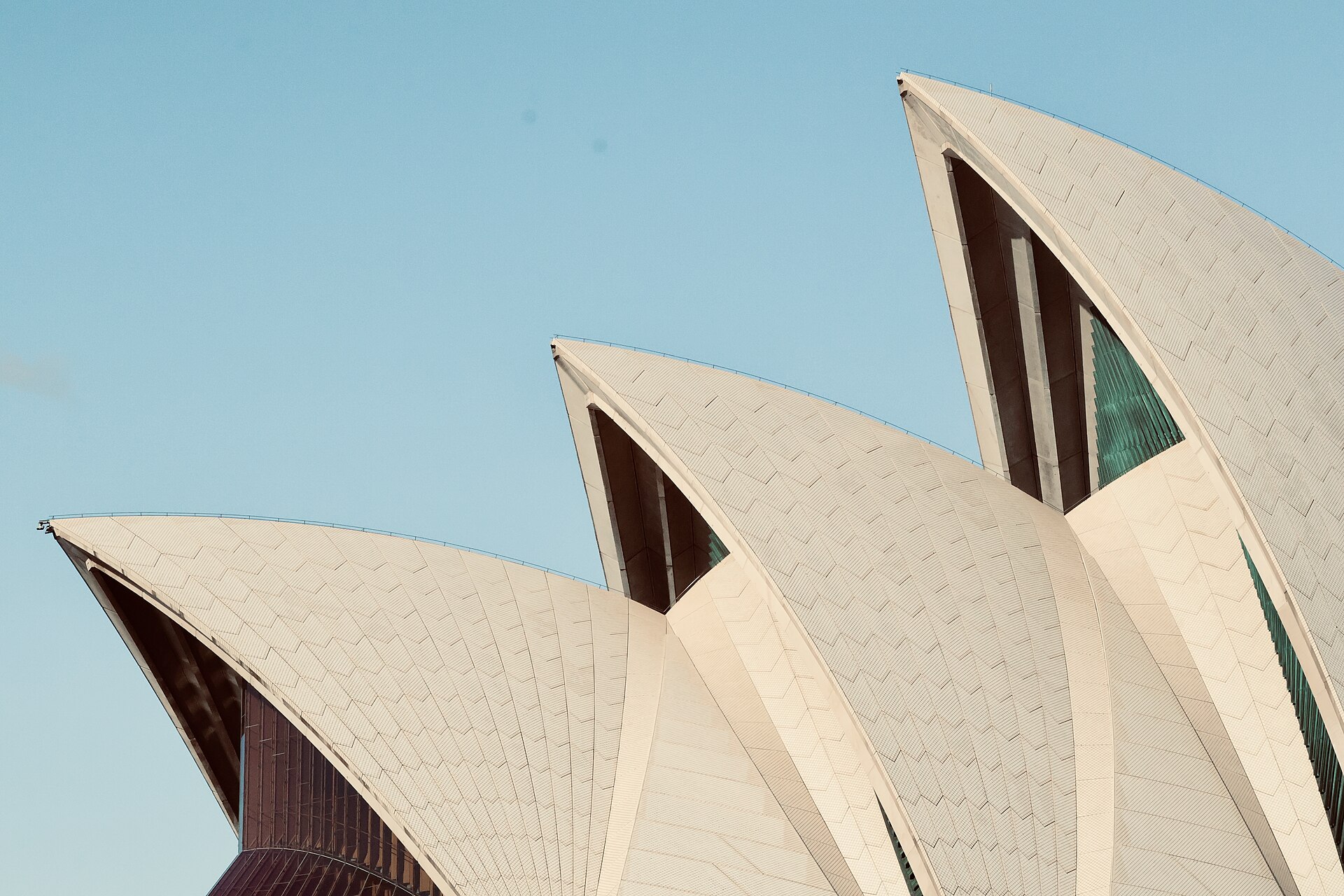
  • Sydney: the Opera House and Harbour Bridge up close, a ferry to Manly, and the Bondi to Coogee coastal walk.
  • The Great Barrier Reef: snorkel or dive days out of Cairns or Port Douglas, with the Daintree rainforest next door.
  • Melbourne and the Great Ocean Road: laneway coffee and street art, then the Twelve Apostles at the end of Australia's great drive.
  • Uluru: the rock changing colour at sunrise and sunset, and desert skies full of stars in the Red Centre.
  • Tasmania: Hobart's MONA, Wineglass Bay and wild west-coast wilderness, all on one compact island.

Getting Around

  • Airport to city: From Sydney Kingsford Smith Airport (SYD), the T8 Airport line train runs from stations under the international and domestic terminals directly to Central and other City Circle stations in about 13 minutes to Central. Taxis queue at official ranks outside each terminal, and ride-hailing uses designated pickup zones.
  • City transport: Sydney's public transport network covers trains, buses and ferries, plus light rail in the inner city. Pay by tapping an Opal card or a contactless bank card or phone on trains, buses, ferries and light rail; daily and weekly fare caps apply, and airport stations carry an extra station access fee on top of the normal train fare.
  • Ride-hailing: Uber and DiDi operate in Sydney, including at the airport from marked pickup zones, and Ola is also available in Sydney. Ride-hailing is convenient for groups and luggage-heavy trips, but prices rise with demand, so compare the in-app estimate with a taxi before booking at peak times.
  • Walking and ferries: Central Sydney, The Rocks, Darling Harbour and the harbour foreshore are very walkable, and ferries across the harbour double as both transport and sightseeing. For late-night arrivals after trains stop, use night buses or a taxi or ride-hailing car rather than relying on the train.

Safety and Practical Tips

Australia is generally very safe, and its cities are easy-going. The bigger risks are natural: the sun is fierce even on mild days, so use high-SPF sunscreen, a hat and water. At the beach, swim between the red-and-yellow flags where lifeguards patrol, and give wildlife — including snakes and spiders — a respectful distance.

Distances are the other trap: towns can be hours apart with patchy coverage in between, whatever your plan. Download offline maps for long drives, tell someone your route, and never start a road trip on an empty tank.

Entry and Visa

Almost every visitor needs permission arranged before flying: depending on your passport, that means an Electronic Travel Authority (ETA), an eVisitor, or a visitor visa — airlines will check. Confirm the right option for your passport on the official Department of Home Affairs immigration site before you book.

Official information: Australian Department of Home Affairs — Immigration.

Weather and Climate

  • Climate zones: Australia has tropical conditions in the far north, with a wet season from about November to April and a dry season from May to October; an arid and semi-arid interior covering most of the continent; and temperate and Mediterranean conditions in the south-east and south-west, with four distinct seasons.
  • Sydney temperatures: Sydney has a humid subtropical climate. Mean daily maximums are around 26°C in January and around 16–17°C in July, with mean minimums around 19°C in January and around 8°C in July. Summer heatwaves above 35°C occur, and winter mornings can be chilly even though Sydney winters are mild by world standards.
  • Rainfall: Sydney receives about 1,213 mm of rain a year on Bureau of Meteorology 1991–2020 normals, spread through the year rather than concentrated in one season. Rain often falls in short, heavy bursts rather than as persistent drizzle, so a wet day can still include long dry spells.
  • Best months and what to pack: September to November and March to May are often rated the best all-round months for Sydney, with warm days, cooler nights and fewer crowds than midsummer. Pack light layers, a light jacket for evenings, a rain jacket, and strong sun protection — sunscreen, a hat and sunglasses — in every season, as UV levels are high even on mild days.

Money and Payments

  • Currency: The Australian dollar (AUD, A$) is the local currency. Notes are polymer and there are no 1- or 2-cent coins, so cash totals are rounded to the nearest 5 cents, while card payments are charged to the exact amount.
  • Cards and cash: Australia is one of the world's most card-friendly countries: Visa and Mastercard are accepted almost everywhere, including for public transport taps, and American Express is accepted at most but not all venues. Cash is rarely needed in cities, but carry a small amount for markets, small cafés and regional areas, and prefer ATMs from the major banks over independent pub or convenience-store machines, which charge higher fees.
  • Multi-currency cards: Wise and similar multi-currency cards are well supported in Australia: you can hold Australian dollars, spend by tap or with Apple Pay or Google Pay, and withdraw from ATMs. This is one of the easiest countries in this batch to use a multi-currency card as your everyday payment method.
  • Tipping and paying in local currency: Tipping is not expected in Australia, as service staff are paid award wages; around 10% for genuinely excellent restaurant service is appreciated but optional, and rounding up a taxi fare is a generous gesture rather than an obligation. Some merchants add a card surcharge, typically 1–2%, which must be disclosed. Always pay in Australian dollars when offered a choice, never in your home currency. A commonly reported contactless limit without a PIN is A$200.