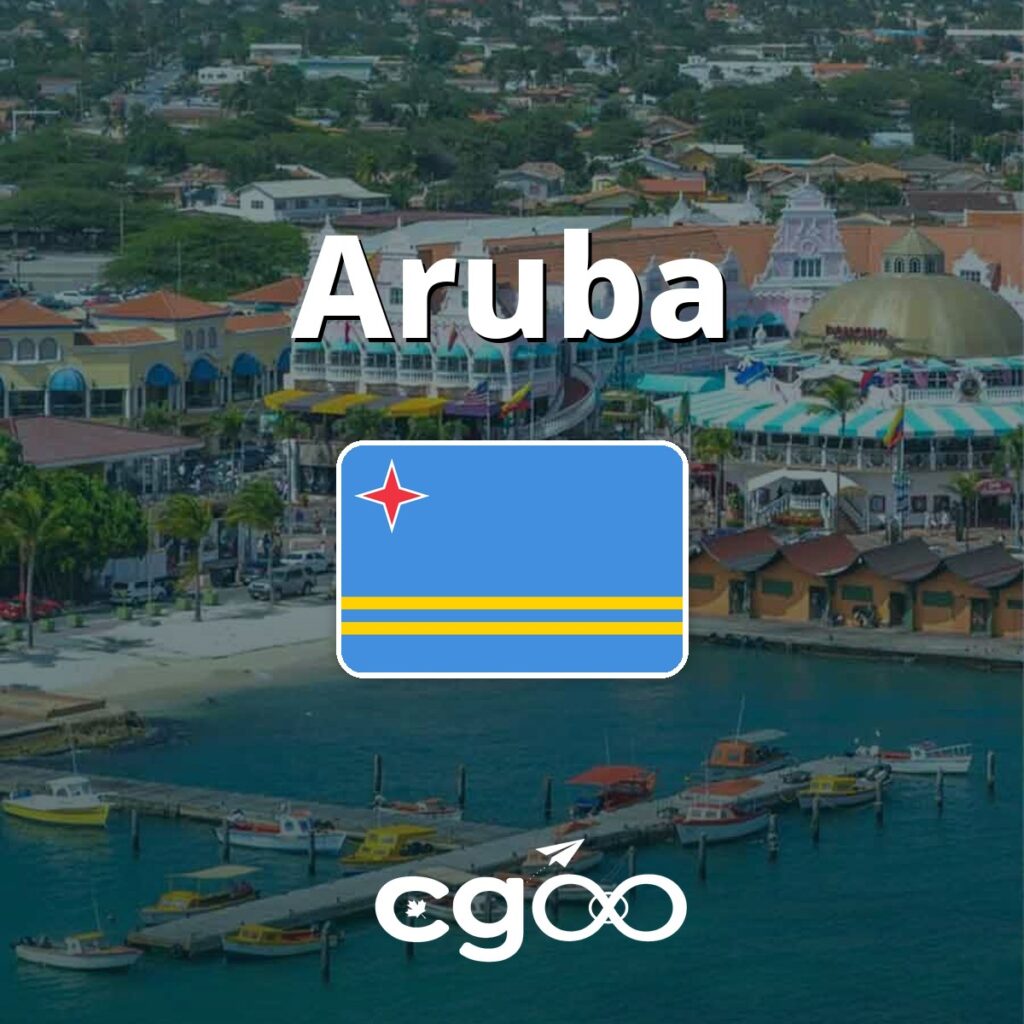
Aruba

Aruba
Aruba🇦🇼

Showing all 19 results

Traveling to Aruba? Land Connected.

Aruba is a small, sunny island where the plan is usually simple: beach, swim, drive, repeat, with dinner in Oranjestad or Palm Beach in the evening. Install your CGOO eSIM before you fly and you connect the moment you land, with no airport SIM queue and no roaming bill. Your own number stays reachable for calls and texts back home while your eSIM handles data.

Choose the Plan That Fits Your Trip

  • Beach resort stay: pick a smaller plan if most of your time is at one resort, where Wi-Fi covers the heavy lifting and data is mainly for getting around.
  • Island road trip: pick a larger plan if you are renting a car and driving to Arikok, Baby Beach, and the lighthouse, where maps and spot checks matter all day.
  • Heavy use: if you stream, video call, or hotspot for work, choose a bigger allowance so beach days and evenings out do not leave you rationing data.
  • Instant delivery: your QR code and installation link are emailed within minutes of checkout, so you can set everything up at home before departure.
  • Good to know: check that your phone supports eSIM before you buy, and install before your flight so the plan is ready when you land.

Travel Highlights

  • Eagle Beach: a wide sweep of white sand shaded by the island's famous bent Divi Divi trees, and one of Aruba's most photographed beaches.
  • Arikok National Park: a rugged desert landscape of cacti, limestone cliffs, and the sheltered Natural Pool on the island's wild north coast.
  • California Lighthouse: a landmark at the island's northwest tip, with wide views over the coast and the dunes around it.
  • Oranjestad: the pastel-colored capital, with Dutch colonial buildings, a harborfront promenade, and a free streetcar through the downtown shopping streets.
  • Baby Beach: a calm, shallow lagoon at the island's southern tip, popular for easy swimming and snorkeling.

Getting Around

  • Airport to the city: Queen Beatrix International Airport (AUA) is close to Oranjestad, and licensed taxis queue at arrivals on government-regulated fixed fares based on destination, not distance.
  • City transport: Arubus buses run frequently between Oranjestad and the hotel areas, and a free streetcar loops through downtown Oranjestad.
  • Ride-hailing: No. Uber and Lyft do not operate in Aruba, so use licensed taxis, hotel-arranged cars, or the public bus instead.
  • Driving note: rental cars are available at the airport and driving is straightforward on well-maintained roads, but watch for roundabouts and keep valuables out of sight in parked cars.

Safety and Practical Tips

Aruba is generally a safe and easy island for visitors, with a relaxed resort atmosphere and a compact road network. Keep the usual beach habits: lock rental cars, do not leave valuables visible, and take care on the rougher north coast, where sea conditions can be strong.

Practical tip: the sun is strong year-round, so pack sunscreen, a hat, and plenty of water, and carry identification as required by local law. Tap water in Aruba is desalinated and safe to drink.

Entry and Visa

Every air traveler, including children, must complete Aruba's online ED Card (Embarkation/Disembarkation Card) within 7 days before arrival; most air travelers aged 8 and older also pay a $20 Sustainability Fee through the same process. Whether you also need a visa depends on your nationality, so check the official portal before travel.

Official information: Aruba ED Card — Government of Aruba.

Weather and Climate

  • Climate zones: Aruba has a hot, dry, semi-arid island climate, with little variation across the island and steady trade winds.
  • Oranjestad temperatures: average temperatures run from around 27.5°C in January and February to around 30°C in August and September, with sea temperatures from about 26°C to 28.5°C.
  • Rainfall: annual rainfall is roughly 450 mm, with the only fairly rainy period from October to December.
  • Best months and what to pack: December to March brings the most settled weather, while the island is warm and swimmable all year. Pack swimwear, light clothing, and strong sun protection, plus a light layer for air-conditioned interiors.

Money and Payments

  • Currency: the currency is the Aruban florin (AWG), but US dollars are widely accepted across the island, and change may be given in florins.
  • Cards and contactless: cards are widely accepted at resorts, larger restaurants, and shops, but many taxis are cash-only, so carry small bills in florins or US dollars for fares.
  • Tipping: tipping is not required in Aruba, but a small tip for good service is appreciated, and taxi fares follow the official fixed-rate list rather than a meter.
  • Wise and multi-currency cards: a Wise card issued elsewhere can be used in Aruba wherever its Visa or Mastercard network is accepted, with conversion at the time of payment. Do not assume you can hold a florin balance in advance; check the Wise app before travel, and always choose to pay in the local currency rather than your home currency.